- Home
- Departments
- Public Works
- Stormwater
- Stormwater Source Control
Stormwater Source Control
What is Source Control?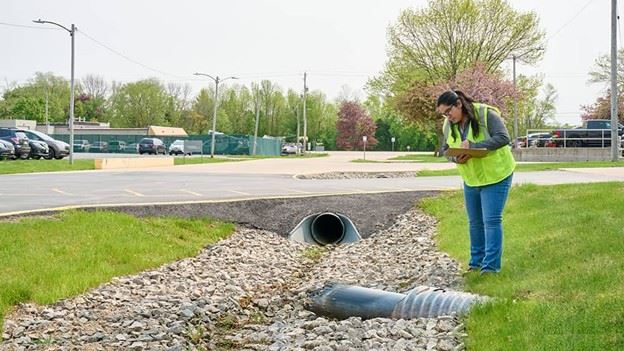
The City of Arlington Stormwater Department is required by the current Department of Ecology's Western Washington Phase II Stormwater Permit (S5.C.8) to inspect all commercial and industrial property owners in Arlington with potential pollution impact to the City of Arlington municipal separate storm sewer system (MS4). This program is intended to ensure all facilities are operated in accordance to current Department of Ecology Standards.
Program Requirements
The Stormwater Source Control program requires existing business and all publicly owned sites within Arlington, to take measures to stop water pollution. Source control includes a variety of actions, such as site investigations and cleanup, business inspections, controlling Stormwater runoff and sewage overflows, coordination among agencies, and public education and outreach.
Which businesses/sites does Source Control affect?
Appendix 8 of the Western Washington Phase II Stormwater Permit lists businesses and activities that are potential sources of pollutants. Businesses within city limits that fall under these categories are mandatorily included in this program.
What do Source Control inspections consist of?
The Arlington Municipal Code allows for source control inspections on existing developments under Section 13.28.240 - Private Facility Inspections. This section authorizes the development and implementation of an inspection program for new and existing private drainage facilities within the city, as required by the National Pollutant Discharge Elimination System (NPDES) Phase II permit. It grants an authorized representative of the city the right of entry to private property at all reasonable times to conduct inspections and tests, provided that the property owner is notified beforehand.
During a typical inspection, the inspector will likely do the following:
- Visit outdoor/indoor loading, storage, and process areas.
- Observe operations.
- Review pertinent documents, permits, and records. Examples include as-builts, SWPPP, chemical storage inventories, spill logs & plans, etc.
- Inspect catch basins, storm drains, and floor drains connected to the stormwater system (MS4).
- Ask questions about business practices.
- Provide technical assistance.
Following the initial inspection, a Notice of Correction will be provided informing businesses/sites if any improvements are required. If corrective actions are required, the inspector will schedule a follow-up inspection to ensure they have been completed.
What are Source Control Best Management Practices (BMPs)?
Source Control BMPs are actions you can take to help prevent or reduce pollutants from entering the stormwater system (MS4). There are three types of BMPs: operational, structural and treatment.
Operational BMPs are required of all pollutant generating businesses/sites under the Source Control program. Common operational BMPs include:
- Sweeping
- Labeling chemical containers with contents
- Good housekeeping and spill prevention (spill kits, training)
- Properly storing chemicals
- Correctly disposing of wash water
- Keeping dumpster lids closed and area free of trash
- Correctly disposing of hazardous waste
Common structural BMPs include:
- Berms
- Plastic sheeting
- Oil/water separators
- Herbicide/pesticide storage in covered, dry containers
- Spill containment sumps
- Covering over dumpster enclosures
- Paving
Common treatment BMPs include:
- Biofiltration swales
- Filter strips
- Conveyance of high potential oil spill areas to sanitary sewer, with an oil/water separator for pre-treatment
Full descriptions of source control BMPs for each type of business/site activity can be found here at the Source Control BMP List.
Preparing for your Source Control Inspection
Please arrange to have a qualified business representative (owner or manager) present at the inspection to provide site access and answer questions. Having the following paperwork (if applicable) prepared in advance may reduce inspection times and cost:
- As-builts
- SWPPP
- Spill logs & plan
- Grease trap service log
- Chemical storage inventory
- Dangerous waste annual report (if you have an active EPA/State Id Number)
The Source Control inspector may ask for some of these items in advance of your inspection.
How do I schedule the inspection?
Contact Jason Lum, City of Arlington Stormwater Technician II, at jlum@arlingtonwa.gov or 360-913-6791 to schedule the inspection.
What are common issues found during inspections?
Below is a list of common issues found during Source Control Inspections.
- Litter and Debris on site or around dumpster
- Spill Kit not on-site
- Spill Response Plan not on-site
- Emergency Contact List not on-site
- Records of Training, Waste disposal and Spill reports
- Waster Dumpsters not closed or leaking
- Hazardous Materials not labeled, covered and stored in secondary containment
- Lack of maintenance of Catch Basins, Ponds, Bioswales and Stormwater Structures